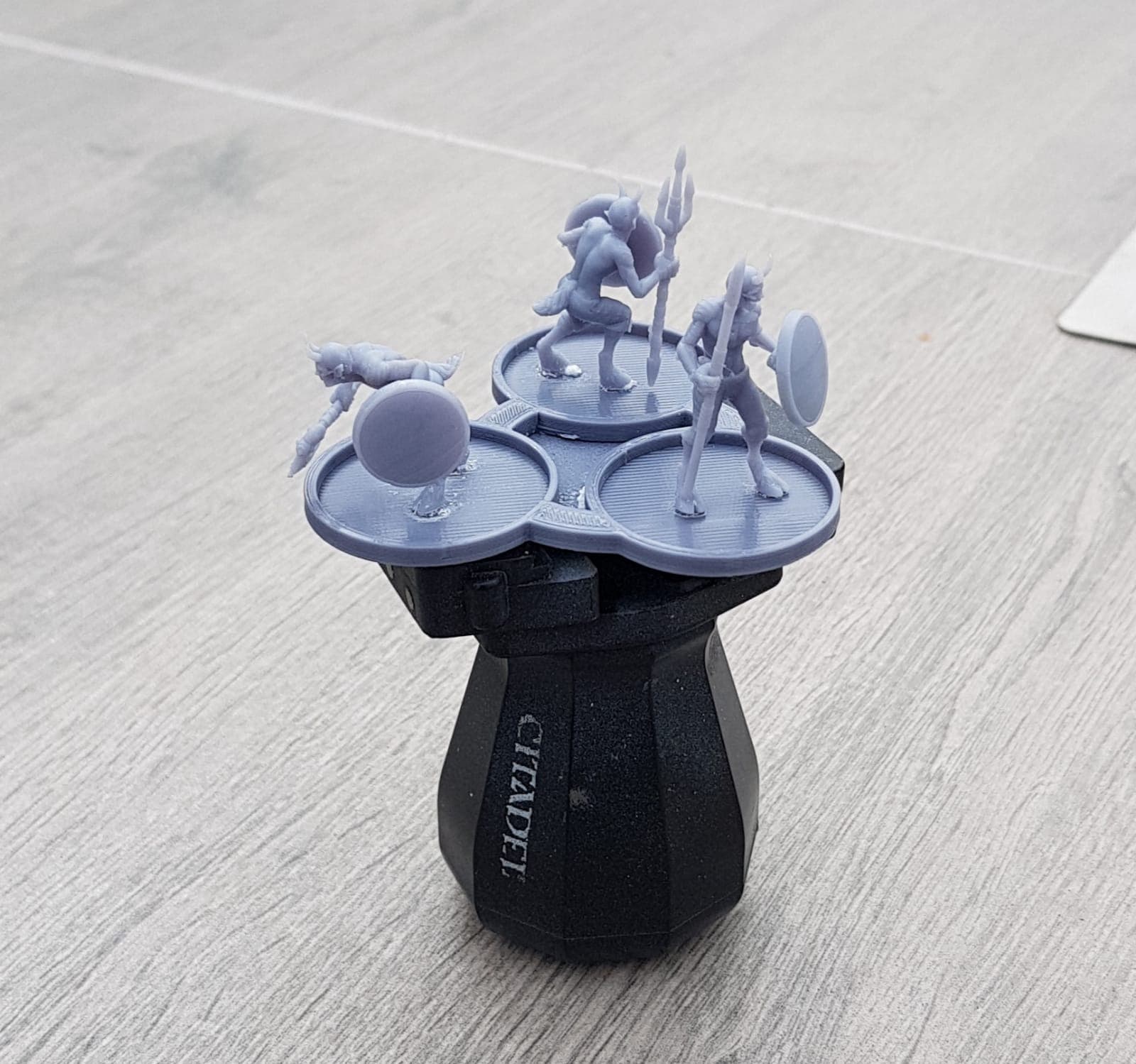
The exact approach can vary between the miniature range and what you unit base will be. If you share what you are working on, folks might be able to give you range-specific tips.
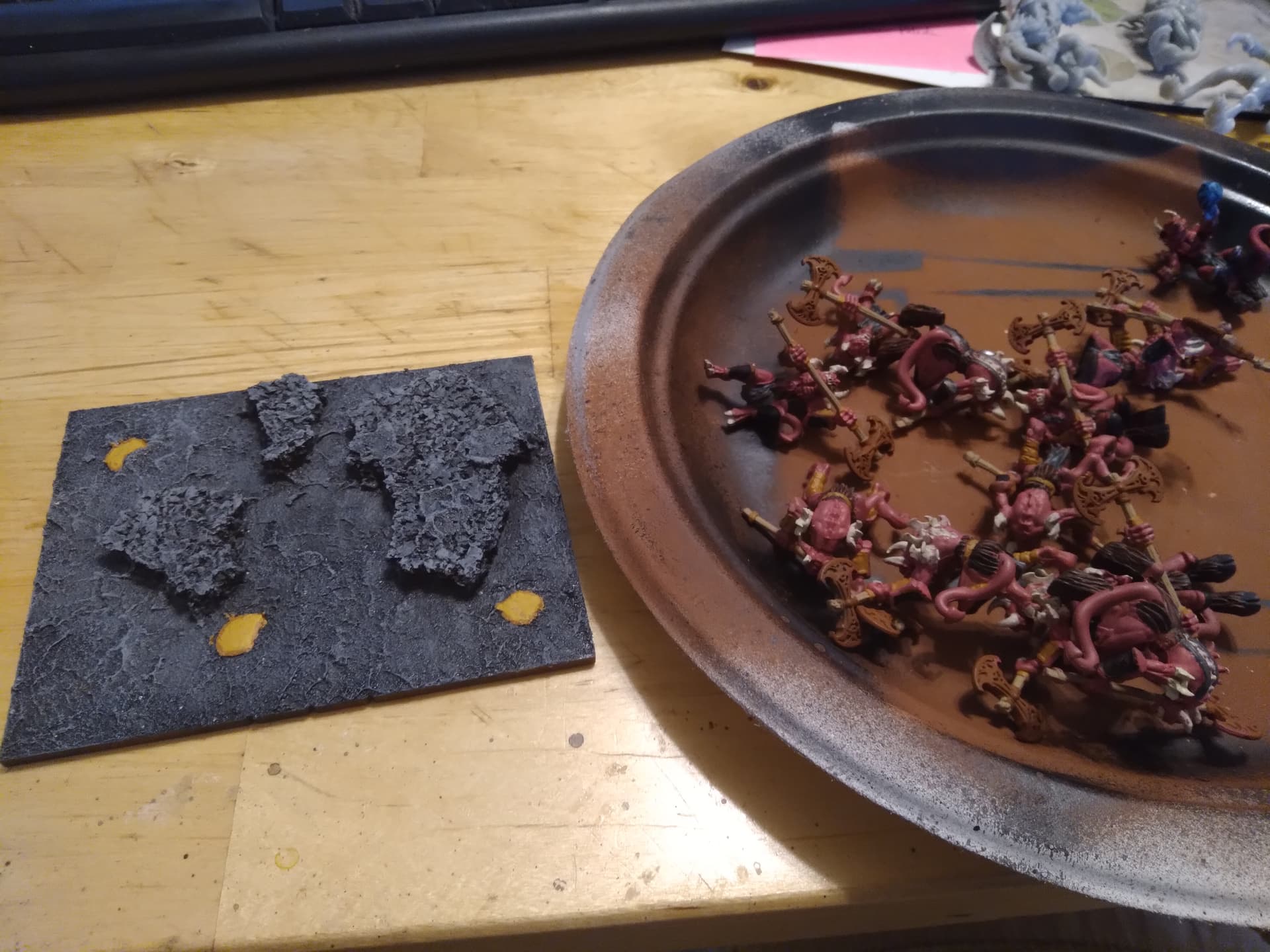
For minis that don’t have stands, say, Mantic’s Lower Abyssals, you can do the popsicle stick approach to help paint them, or stick them to a base temporarily for easier painting angles and for holding, as suggested above by others. I am a bit of a barbarian, and just grab a foot or arm or weapon and paint the rest and slowly work my way through each color for the unit. However you tackle painting them, you just do the minis and base separately, as I’ve got going here in this WIP, and connect the minis later foot-to-base with super glue.
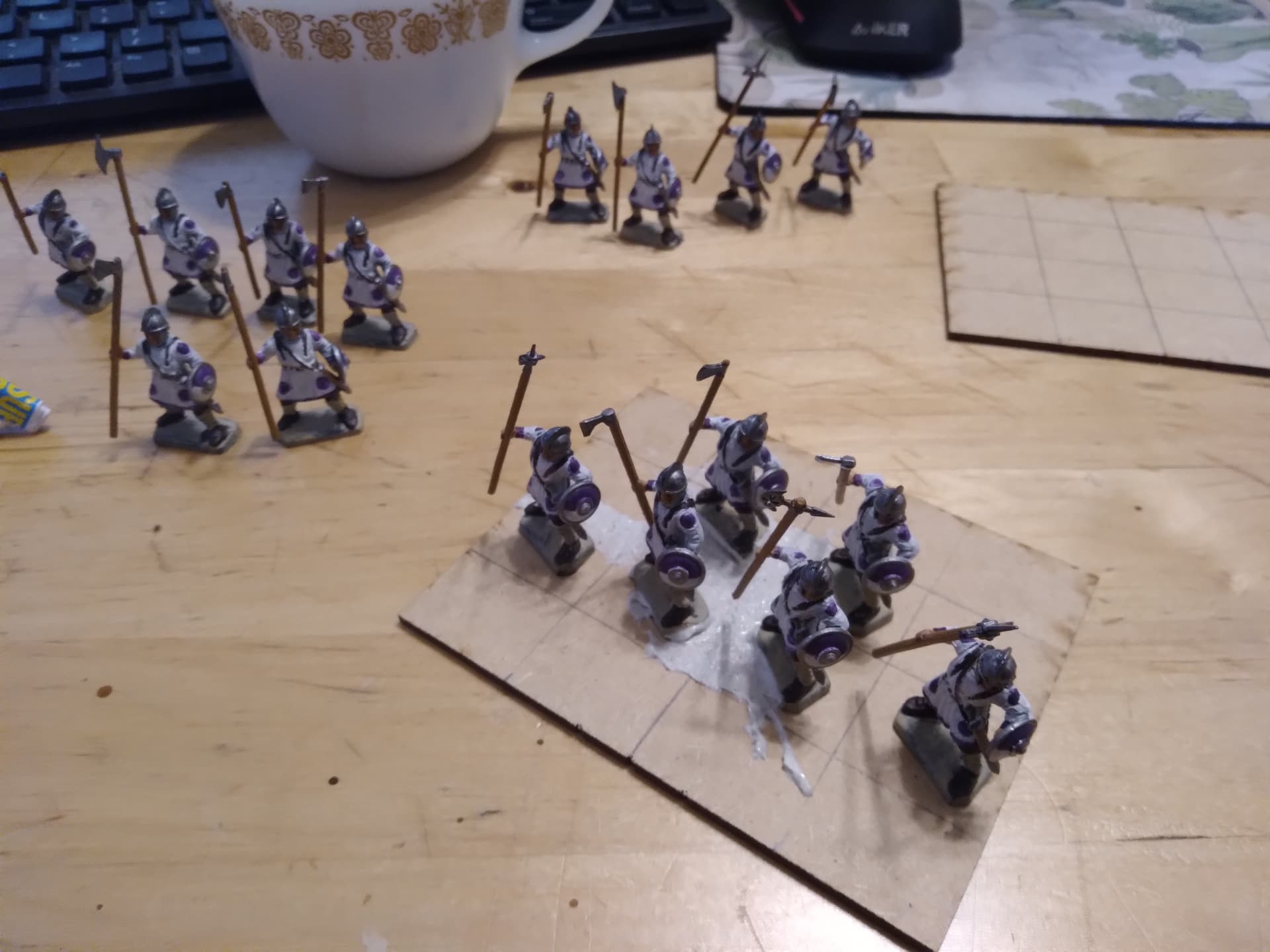
For minis that do have stands, like these Gripping Beast Late Roman Infantry, nowadays I paint the mini, and then paint the stand beneath. I then attach them to the base and start working my way out from the middle, adding whatever basing stuff I want, which is usually some kind of paste these days. If the poses are dynamic or the weapons long enough to mess with paintbrush angles, I’ll actually wait for the paste to dry, paint it, and then add the next batch of minis, adding like, 4 at a time expanding form the center. This is a lengthy process since you are waiting on things to dry between each batch.
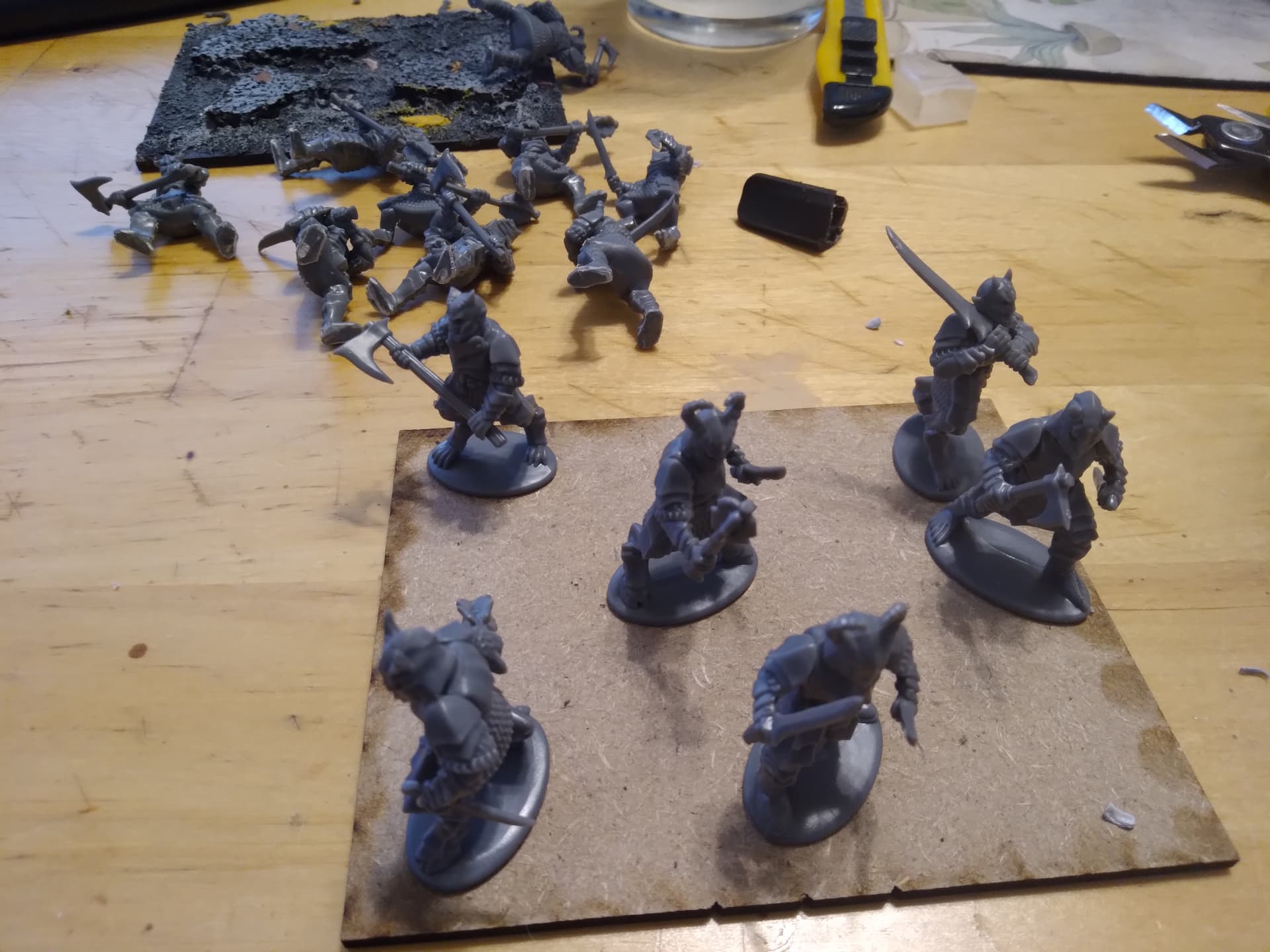
With more “lively” multibased units and stands, like something with elevation, I will keep 1/3 of the unit with stands, and clip the rest, like with these Frostgrave Demons. These are WIPs, but I’ll paint all the minis up, adding some paste to the ones with stands and painting that with a base color (black, in this case). I’ll then glue the minis with stands to the base, and build the multibase around them. Having just a few minis with stands, even glued down, I’ll be able to paint the stuff between their feet as I paint the base, and then I’ll add the other 2/3 of the unit to the multibase, just gluing feet to the final base, like I would for minis without stands.